
Is a rental property a good investment? It can be. It can also be an expensive lesson. The difference usually isn’t the spreadsheet. It’s what the spreadsheet left out: the roof that had three years left, the panel the insurer wouldn’t cover, the sewer line that backed up in month two.
We inspect homes and small apartment buildings across the Sacramento area, and a good share of them are being bought as rentals. This guide covers what first-time landlords ask us most. How a rental actually makes money, and where it loses it. The costs that surprise new owners. How buying a rental property works step by step, and where the inspection fits. What to look for once you’re under contract. And the local rules you should know about before you close. Where a question belongs with your lender, agent, or tax professional, we say so and hand it off.
Is a Rental Property a Good Investment? What the Question Really Asks
Whether a specific rental is a good investment comes down to two kinds of information.
The first kind is financial. Does the rent cover the full cost of owning the place, with something left over? How might the property’s value change over time? How does the purchase fit the rest of your finances and your plans? Those are questions for your lender, your real estate agent, and, if you want one, a licensed financial or tax professional. We don’t advise on them, and this article won’t try to.
The second kind is physical. What shape is the roof in? How old is the water heater? Will the electrical panel pass an insurer’s review? Are termites already in the framing? This half is fully knowable before you buy, and it changes the first half directly. A property that needs a roof and a water heater in its first two years is a different investment from one that doesn’t, even when both look identical on paper. A pre-purchase inspection is how the physical half gets onto the spreadsheet at all.
How a Rental Property Makes Money (and Where It Loses It)
In plain terms, a rental can pay you in three ways. It can also cost you in each of them. Knowing the vocabulary helps you follow the conversation with your lender and agent.
Cash flow
Cash flow is what’s left of the rent each month after every cost of ownership: the loan payment, property taxes, insurance, maintenance, management if you hire it, and a reserve for months with no tenant. Positive cash flow means the property pays for itself and then some. Negative cash flow means you’re topping it up from your own pocket, which some investors accept for a while and others never do.
Appreciation
Appreciation is the property gaining value over time. It’s real, and it’s also uncertain. Nobody can promise it for a particular house in a particular decade. Condition matters here too: a well-kept property holds value in ways a neglected one doesn’t.
Tax treatment
Rental income is taxable, and many ownership costs can be deducted against it. The IRS explains the rules, including how depreciation works, in Publication 527, Residential Rental Property. How those rules apply to you is a question for a tax professional.
Leverage, and the risk that comes with it
Most investors borrow to buy. A loan lets you control a large asset with a smaller amount of your own money, which multiplies gains when things go well. It also multiplies losses when they don’t, and the loan payment is due whether or not the unit is rented. That’s why the condition report matters so much: a large unplanned repair on a leveraged property hurts twice.
Pros and Cons of Owning a Rental Property
| Pros | Cons |
|---|---|
| Monthly income if the rent covers the costs | Costs continue when the unit is empty |
| Potential gain in value over time | Value can also fall, and selling takes time and money |
| Ownership costs are often deductible against rental income (see IRS Publication 527) | Record-keeping and tax rules add work, and usually a tax professional |
| You control the property and its upgrades | You also own every repair, at whatever hour it happens |
| A physical asset you can inspect and understand | Tenants, vacancies, and local regulations all take time and attention |
| Can be a long-term source of income | Needs cash reserves you can’t touch for anything else |
The Costs New Landlords Underestimate
The purchase price and the loan payment are the easy numbers. These are the ones that catch first-time landlords off guard. None of them show up in a listing.
- Vacancy. Every month between tenants is a month of full costs and zero rent. Turnover also means cleaning, painting, and re-listing.
- Repairs. The small stuff: a garbage disposal, a leaking faucet, a broken window latch. Cheap one at a time, constant as a group.
- Big-ticket replacements. Roof, water heater, furnace, air conditioner, sewer line, exterior paint. These arrive on their own schedule, and the inspection report is your best guess at that schedule.
- Insurance. Landlord policies differ from homeowner policies. Insurers also care about the roof’s age and the type of electrical panel, which is another reason the inspection matters.
- Property management. If you don’t want the 2 a.m. calls, someone else will take them for a fee.
- Local compliance. Rental registration, city inspection programs, rent-increase rules, and habitability standards. More on the Sacramento specifics below.
- Turnover repairs. Wear that’s fine in your own home is a repair between tenants.
We don’t publish average maintenance or vacancy figures. They vary too much by property age, construction, and neighborhood, and a national average tells you little about a 1960s ranch in Carmichael or a 2005 duplex in Elk Grove. What we can tell you is which of those big-ticket items are close on the property you’re actually buying.
How to Buy a Rental Property: Where the Inspection Fits
Buying your first rental property follows the same broad steps as buying a home, with a few extra questions at each one. Here is the sequence most buyers follow, and who to ask at each step.
- Sort out the money first. Talk to a lender about financing an investment property before you shop. Lenders treat rentals differently from primary homes. Knowing your real budget saves you from falling for a property you can’t close on.
- Decide what kind of rental you want. A house, a condo, a duplex, and a small apartment building each behave differently as rentals. A real estate agent who works with investors can walk you through the trade-offs in your target area.
- Run the numbers on candidates. Rent estimates, taxes, insurance, and the cost items above. This is where a cap rate or a “1% rule” screen comes in for some investors (see the FAQ). It’s your math, or your agent’s and lender’s, not ours.
- Make an offer with an inspection contingency. The contingency is the window in which you can inspect and, based on what you find, renegotiate or walk away. Your agent writes it; guard it.
- Get the inspection, plus the add-ons the property needs. A home inspection, and for most Sacramento-area properties a termite inspection too. A sewer scope for older homes. Schedule as soon as you’re under contract so the report lands well inside your contingency window.
- Use the report. Ask for repairs, a price adjustment, or a credit, or decide the property isn’t the one. Your agent handles the negotiation; the report gives them something specific to negotiate with.
- Line up insurance and any local registration. Landlord coverage, and whatever the city requires before you rent the unit out.
- Close, and keep the report. It becomes your maintenance plan and your dated record of the property’s condition on day one.
What to Look For When Buying a Rental Property
A standard home inspection covers the whole property. These are the areas where findings matter most when a tenant will be the one living there, and where our inspectors pay extra attention on investment purchases.
| System or area | Why it matters for a rental | What the inspection looks at |
|---|---|---|
| Roof | A roof replacement is one of the largest single costs a landlord faces. Leaks damage the tenant’s belongings as well as the building. | Condition and age indicators of the covering, flashing, roof penetrations, gutters and drainage, and signs of past leaks seen from the attic. See our roof inspection service for the full scope. |
| Heating and air conditioning | A mid-summer AC failure in the Sacramento Valley is a habitability problem and an urgent, expensive repair. It can’t wait until fall. | Operation of heating and cooling, age and condition of the equipment, ducting, filters, condensate handling, and visible signs of skipped service. |
| Plumbing and water heater | Leaks and water-heater failures are among the most common emergency calls a landlord gets. | Supply and drain condition, water heater age and installation, visible leaks, water pressure and drainage, and fixtures. Older drain lines are a good candidate for a separate sewer scope inspection. |
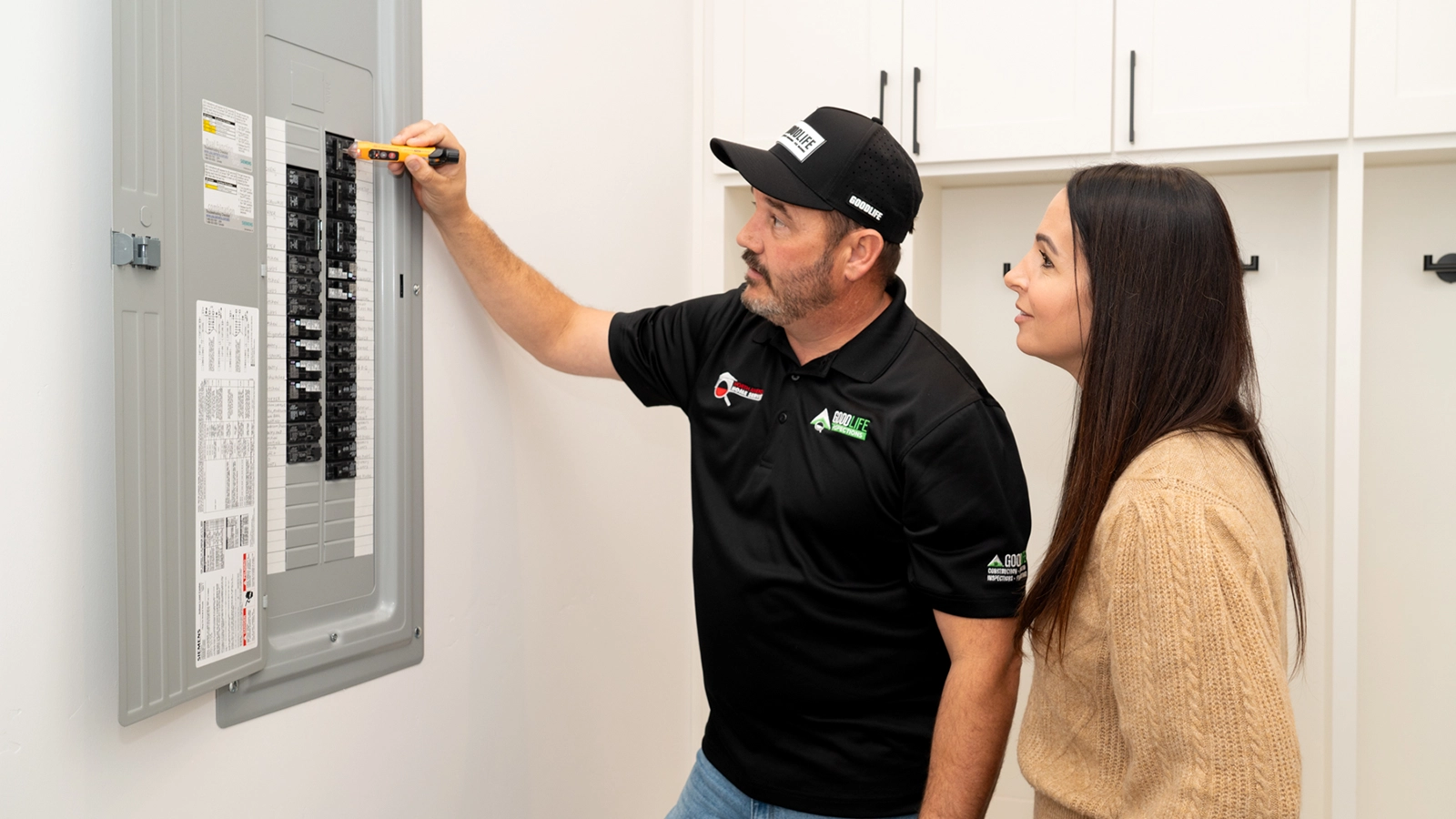
| Electrical | Panel and wiring condition affect tenant safety and can affect whether an insurer will write the policy. Upgrades are disruptive in an occupied unit. | Panel type and condition, visible wiring, grounding, GFCI and AFCI protection where present, outlets, and switches. |
| Termites and wood-destroying organisms | Termite damage keeps spreading while a tenant is in place, and repairs often mean opening walls or floors. | A termite inspection is a separate, state-licensed inspection with its own report. Ask for it alongside the home inspection on any rental purchase. |
| Moisture, dry rot, and drainage | Water damage builds quietly, and it’s harder to catch once a unit is furnished and occupied. | Grading and drainage, moisture signs in the crawl space and attic, decking and trim, window and door surrounds, and dry rot. |
| Safety items | Missing or broken safety equipment is a tenant-safety issue from day one. | Smoke and CO detectors, stairs and railings, water-heater strapping, garage door safety features, and similar items as observed. |
The report does three things for a rental buyer that a listing never will. It gives you a condition baseline for every major system, so your maintenance budget is built from the actual house instead of a percentage. It gives you documented points to negotiate with. And it lets you compare two candidate properties by what each will cost to run, not only by price.
Buying a Duplex or Small Apartment Building
Duplexes and fourplexes are popular first rentals. One purchase brings in more than one rent check, and some buyers live in one unit and rent out the others. The inspection changes with the building. It grows to cover shared systems and common areas as well as each unit: the shared roof, shared water or gas service, common laundry, exterior stairs and walkways, parking, and site drainage. Getting access to every unit is part of the scheduling, and tenants in place add lead time. See our multi-family inspection service for that scope, or commercial inspections for larger or mixed-use buildings.
Inspecting a Property That Already Has Tenants
Many rental purchases are of occupied properties. That changes the logistics more than the inspection itself.
- Access goes through the seller. Your agent arranges entry with the seller and the current tenant, following the lease and the notice the seller has to give. Build that lead time into your contingency period.
- Furnished rooms limit what can be seen. Inspectors don’t move a tenant’s belongings. Areas blocked by furniture or stored items are noted in the report as not accessible. Plan to look at those areas during a vacancy or your final walk-through.
- Tenants know things. A tenant who mentions the shower that never gets hot, or the breaker that trips every summer, is telling you something the listing never will.
- The report doubles as a move-in baseline. If the tenant stays after closing, the inspection report is your dated record of the unit’s condition when you took over.
Sacramento and California Landlord Rules to Know Before You Buy
Buying a rental in California means buying into a set of rules. Sacramento adds its own. We’re inspectors, not attorneys, so this section names the rules and points you to the official sources. Read them, and talk to a real estate attorney or property manager about how they apply to the property you’re considering.
- Statewide rent cap and just-cause rules. California’s Tenant Protection Act limits annual rent increases on most rental housing more than 15 years old to 5% plus the change in the cost of living, up to a maximum of 10%, and pairs that with just-cause eviction rules. The California Attorney General’s rent cap page explains which housing is covered and notes that stricter local rules take priority where they exist.
- Sacramento’s Tenant Protection Program. Inside the city limits, covered units fall under a local cap of 5% plus the California CPI change, which the city set at 8.6% for 2026, with just-cause protections after 12 months of tenancy and penalties of up to $25,000 for violations. The city’s Tenant Protection Program page has the current rate and the ordinance text (Sacramento City Code Chapter 5.156).
- Rental registration and city inspections. The City of Sacramento runs a rental housing inspection program through its Rental Info Hub. Other cities in the region have their own requirements. Ask before you close what the city expects of a new landlord.
- Habitability. California landlords must keep rentals in livable condition: working heat, plumbing, electrical, weatherproofing, and so on. Several items on that list are exactly what a pre-purchase inspection evaluates, which is one more reason to read the report as a landlord and not only as a buyer.
Planning Renovations After the Inspection
Some rental buyers plan to renovate before the first tenant moves in. The inspection report is the right place to start, because it separates cosmetic updates from repairs that have to happen first. There’s little point in new flooring over a slab with an active plumbing leak under it. Get bids on the must-fix items from licensed contractors before you close, so those numbers are part of your decision rather than a surprise after it. For a full kitchen or bathroom remodel, or other general construction, that’s outside what an inspection company does. Our sister company Good Life Construction, a separate licensed general contractor, handles kitchen remodeling and similar projects in the Sacramento area.
What an Inspection Can’t Tell You
An inspection is a visual look at the property’s condition on the day we’re there. We don’t open walls or move belongings. It is not a financial analysis, a guarantee, or a forecast. It won’t tell you:
- What rent the unit will command, or whether the deal works financially. That’s your agent and your own math.
- What financing to use, how much to put down, or how to hold title. That’s your lender and, where it applies, an attorney or tax professional.
- Whether the property meets local rental registration, zoning, or HOA rental rules. Check those with the agency or association before you close.
- What’s inside walls, under slabs, or behind stored belongings, or what will fail next year. Inspectors report what is visible and accessible, and note what wasn’t.
Good Life Inspections doesn’t give investment, tax, legal, or lending advice. What we give you is the condition information those decisions should rest on.
Frequently Asked Questions
Is a rental property a good investment right now?
It depends on the property, the price, the financing, and your own situation. Anyone who gives you a blanket yes or no is selling something. What we can say from the inspection side: the buyers who do well tend to know exactly what they’re buying before they close. The ones who struggle are usually surprised by a big repair in the first year.
What is a good cap rate for a rental property?
A cap rate is the property’s yearly net operating income (rent minus operating costs, before the loan) divided by its price, shown as a percentage. It’s a quick way to compare properties. What counts as “good” depends on the market, the property type, and how much risk you’re comfortable with, so there isn’t one right number. Your agent or a financial professional can tell you what’s typical where you’re shopping. Our job is to make sure the operating-cost side of that math reflects the real building.
What is the 1% rule?
The “1% rule” is a rough screen some investors use: if the monthly rent is around 1% of the purchase price, the property may be worth a closer look. It’s a filter, not a rule, and in higher-priced markets like much of California many perfectly workable rentals won’t meet it. Treat it as a way to sort a long list, not as a verdict.
How much down payment do I need for an investment property?
Usually more than for a home you’ll live in. Lenders see rentals as higher risk and set their own requirements, which also depend on the loan type and the number of units. Ask a lender early; the answer shapes your whole search.
Do I still need an inspection if I’m buying a rental “as-is”?
Yes, and arguably more so. “As-is” describes what the seller will and won’t fix. It doesn’t change what’s wrong with the property. An inspection tells you what you’re agreeing to take on, which is exactly what an as-is purchase requires.
Can you inspect a rental that has tenants living in it?
Yes. We inspect occupied properties routinely. Access is arranged through the seller and your agent. Any area we can’t reach because of furniture or stored items is recorded in the report as not inspected.
What’s the difference between a home inspection and a “rental inspection”?
A pre-purchase home inspection is the buyer’s own check of a property’s condition before closing. A “rental inspection” usually means something else: a landlord’s move-in or move-out walkthrough, a periodic check during a tenancy, or a city rental-housing program inspection. This article, and the inspection we perform for buyers, is about the first kind.
Should I add a termite inspection or a sewer scope?
For most rental purchases in the Sacramento area, a termite inspection is worth ordering alongside the home inspection. It’s a separate, state-licensed inspection with its own report. A sewer scope is a strong add-on for older homes, or for any property where the home inspection notes slow drains or older drain-line material. We’ll flag either one when we see the property.
Can I use the inspection report to negotiate the price?
Buyers commonly use inspection findings to ask for repairs, a price reduction, or a credit at closing. Whether and how you can depends on your purchase agreement and its inspection contingency, so work through your real estate agent. The report’s job is to make the findings specific and documented.
Schedule a Pre-Purchase Inspection for Your Rental Property
Considering a rental property in Sacramento or a nearby city? Schedule your inspection online before your contingency window closes, or call (916) 481-0268 to talk through which inspections the property needs. New to choosing an inspector? Our guide on how to choose the right home inspector covers what to ask. And if the property needs real work, see our fixer-upper guide.