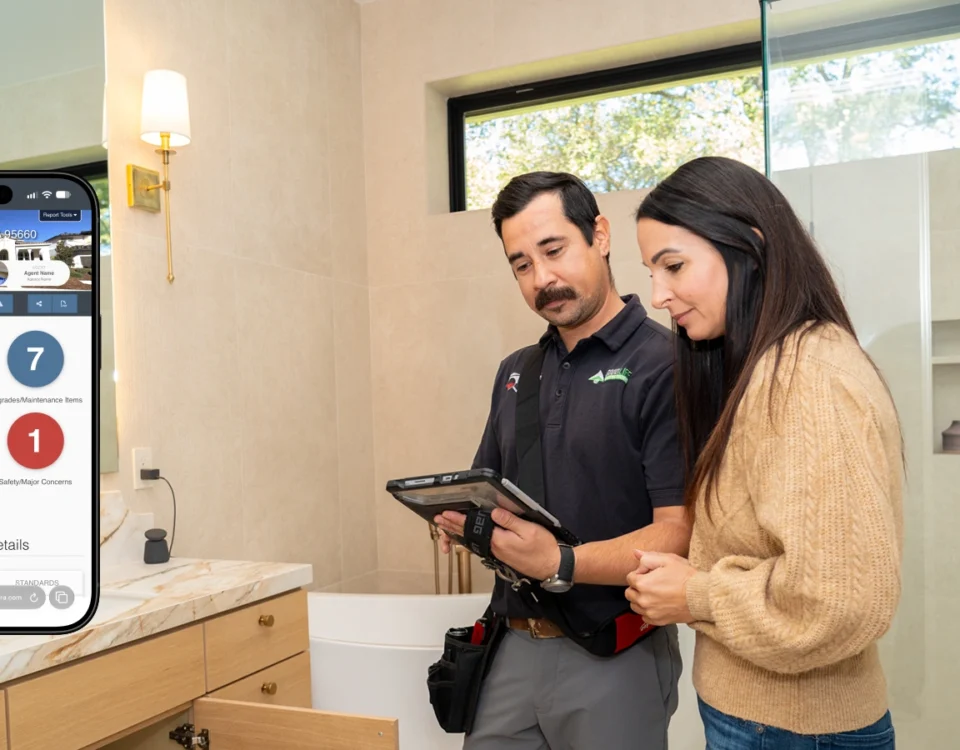
Appraisers look at five things: where the home is, what similar homes recently sold for, the home’s size and layout, its condition and quality, and the updates and extra features it has. Since November 2, 2026, the new appraisal form used for Fannie Mae and Freddie Mac loans asks for much more detail on condition: separate interior and exterior ratings, the update status of kitchens and bathrooms, and a fuller section for accessory dwelling units (ADUs). Sacramento appraiser Ryan Lundquist walked through these changes with Jason Hampton on the Good Life Inspections Podcast, and most of the new detail is the same information a pre-listing home inspection documents.
What do appraisers look for when they appraise a house?
An appraiser’s job is to give the lender an independent opinion of market value. To do that, the appraiser inspects the property, then compares it with recent sales of similar homes nearby, called comparables or “comps.”
These are the factors that move the number:
- Location. Neighborhood, school area, and the street itself. A busy road, a commercial neighbor or an awkward lot can lower value compared with a quiet street nearby.
- Recent comparable sales. The closed sales the appraiser picks carry more weight than any list price, including yours.
- Size and layout. Living area, bedroom and bathroom count, and how well the floor plan works. Ryan Lundquist named awkward layouts as one of the things buyers are walking away from right now.
- Condition and quality. How well the house has been kept up, and how good the materials and workmanship are.
- Updates and features. Remodeled kitchens and bathrooms, newer systems, garages, pools, solar, and ADUs.
An appraisal is not a home inspection. The appraiser notes condition as it affects value and loan eligibility, while a home inspector tests systems and reports defects in detail. Our guide to the difference between home inspections and home appraisals explains how the two reports work together.
What changed with the new appraisal form (UAD 3.6)?
The new form replaces the old set of appraisal forms with one report that adapts to the property. Fannie Mae and Freddie Mac retired the separate form numbers, such as the 1004 for single-family homes, the 1073 for condos and the 1025 for small multifamily, and moved to a single data-driven report known as the redesigned Uniform Residential Appraisal Report (URAR) under UAD 3.6.
“There’s one to rule them all now,” Ryan Lundquist said on the podcast. He added that the new form has hundreds more fields, and that appraisers now answer specific questions in each section instead of writing long comments in an addendum.
The changes that matter most to sellers and buyers:
- Separate interior and exterior ratings. The 1 to 6 condition and quality scales stay, but appraisers can now rate the inside and outside of the house separately when they differ.
- Kitchen and bathroom update status. The report records whether kitchens and baths are updated, room by room.
- More detail on ADUs. Size, condition, rooms and location of an accessory dwelling unit are reported in a consistent section.
- New property details. Items such as ceiling height, energy-efficient features, disaster-mitigation features and solar ownership now have their own fields.
- Value up front. According to Ryan Lundquist, the appraised value now sits on the first page of the report, so nobody has to hunt for it.
Timeline. UAD 3.6 became mandatory for new appraisals submitted to Fannie Mae and Freddie Mac on November 2, 2026. Lenders approved for a temporary exception can keep submitting the older format through May 19, 2027, and the new format is required for every new submission from May 20, 2027 (HousingWire, September 30, 2026; Freddie Mac UAD FAQ). Ryan expects the process to settle during 2027, because many lenders and software companies were not ready on day one.
How do appraisal condition ratings work?
Appraisers grade condition on a six-step scale, from C1 (new) to C6 (serious damage). In plain terms:
| Rating | What it usually means |
|---|---|
| C1 | New or never lived in |
| C2 | Like new: recently built or fully renovated, no deferred maintenance |
| C3 | Well kept, with some updated parts and only light wear |
| C4 | Adequately maintained, with normal wear and some minor deferred maintenance |
| C5 | Obvious deferred maintenance; some significant repairs needed, but livable |
| C6 | Damage serious enough to affect safety, soundness or structure |
Most resale homes in the Sacramento area fall in the C3 to C4 range. The new form’s wording for each grade was rewritten, but the scale itself did not change. What did change is the evidence behind the grade. With component-level detail, a dated roof, an original kitchen or a worn exterior shows up on its own line instead of disappearing into one overall rating.
A C5 or C6 rating matters beyond price. Lenders can require repairs before closing, and government-backed loans have their own property standards. Our article on FHA inspection requirements covers those rules.
Which home systems matter to an appraiser?
Roofs, heating and cooling, water heaters, foundations and wood damage matter most, because they decide whether a house reads as well maintained or as deferred maintenance. These are also the items a buyer’s inspector will test, so problems here tend to surface twice.
- Roof. Age and visible wear affect the exterior rating. A roof inspection gives you a written condition report and an estimate of remaining life.
- HVAC. An appraiser wants to know roughly when the system was installed. Ryan’s advice on the podcast: if you don’t know the exact year, a range such as “6 to 8 years ago” is fine.
- Water heater. Age, venting and seismic strapping are easy to check and easy to fix. See how long a water heater lasts.
- Foundation and structure. Cracks, sloping floors and moisture in the crawlspace can pull the condition rating down.
- Termite and dry rot damage. Damaged trim, siding or framing reads as deferred maintenance. A termite inspection shows what is active, what is old damage, and what the repair covers.
Jason Hampton made a point on the podcast that applies here: a pest report often gets read for its bottom-line repair number, while the findings behind that number tell the real story. The new appraisal form works the same way, with the value on page one and the condition details behind it.
Home appraisal checklist: how to prepare for the appraiser
The best preparation is a short, honest record of what has been done to the house, plus easy access to every part of it. Here is the checklist we suggest for sellers and homeowners refinancing:
- List updates with dates. Roof, HVAC, water heater, windows, kitchen, bathrooms, flooring, electrical panel. Exact years are best; ranges are acceptable.
- Gather permits and final sign-offs for additions, garage conversions, ADUs, solar and major remodels.
- Note anything the form now asks about: ADU size and rooms, solar ownership (owned or leased), energy-efficient upgrades, and ceiling height in rooms that are unusual.
- Fix small, visible defects: leaks, broken windows, missing smoke and carbon monoxide alarms, peeling exterior paint, damaged trim.
- Clean and clear access to the attic, crawlspace, garage, water heater, electrical panel and any ADU.
- Have reports ready from a recent home, roof or termite inspection, including any completed repair work.
- For agents: put the update details in the MLS listing. Ryan Lundquist noted that this helps again later, when the sale becomes a comparable for another appraisal.
A pre-listing home inspection covers most of this list in one visit. You learn the condition of the roof, systems and structure before the appraiser and the buyer’s inspector do, and you get time to fix or document what matters.
What hurts a home appraisal?
Deferred maintenance, poor location factors, awkward layouts and unpermitted work are the most common reasons an appraisal comes in lower than expected. In a market with more homes for sale, buyers also have more alternatives, so these issues weigh more.
Ryan Lundquist listed what Sacramento buyers are currently stepping back from: busy or adverse locations, awkward layouts, unpermitted work that would be expensive to correct, and high HOA dues. He drew the line between a small courtesy HOA fee and dues of $400 to $700 a month or more on attached homes, which buyers are weighing heavily.
Does unpermitted work affect an appraisal?
Unpermitted work adds uncertainty, and uncertainty can lower value or slow a sale. “When there’s a lack of permits, it infuses uncertainty into the transaction,” Ryan said. Buyers, underwriters, lenders and appraisers may each treat the same garage conversion or ADU differently.
He gave an example from Fair Oaks: a house with about 1,200 square feet in the tax records and about 2,200 square feet in reality went through several buyers before it closed, because the extra 1,000 square feet had no permits. How much buyers care also depends on the price range and the city. First-time buyers often focus on the finished space; buyers of second or third homes tend to ask about permits.
Some cities check before a sale. The City of Davis requires a Resale Program inspection or self-certification for one- to three-unit residential properties before they sell, and the required work must be finished before close of escrow or by the buyer within 90 days of closing (City of Davis Resale Program). Most other cities in the region have no such program, but lenders and buyers still ask.
If your home has an unpermitted addition, garage conversion or ADU, start with how to get a building permit in Sacramento. For design and permit drawings, TOV Plans and Permits is a separate Good Life Group company that prepares plans and handles permits, including ADU permit requirements. An inspection before you list tells you what an appraiser and a buyer’s inspector are likely to notice.
What is a Sacramento appraiser seeing in the market right now?
According to Ryan Lundquist, speaking on November 7, 2026, the Sacramento region is slowing for the season and then some. His observations:
- The region lost roughly 15 to 20 percent of its buyer pool quickly after mortgage rates jumped, and buyers have been slow to return even as rates eased.
- Active listings are rising because fewer homes are going into contract, not because more sellers are listing.
- Sellers are giving more concessions than a year ago, and price reductions are common.
- About 1,400 buyers closed escrow in the region that month, almost 20 percent fewer than a year earlier.
- Well-presented homes still sell fast: about 15 percent of that week’s pending sales went into contract in their first week on the market.
His pricing advice for sellers: compare your home with the listings that are actually getting into contract, not with the overpriced ones that are sitting. Condition and presentation are part of that comparison, which is where a clean inspection report helps.
Common questions
What negatively affects a home appraisal?
Deferred maintenance, a busy or adverse location, an awkward floor plan, unpermitted additions and weak comparable sales nearby are the usual causes. Clutter and dirt do not change the value directly, but they can hide the condition an appraiser needs to see.
What should I not say to an appraiser?
Avoid pushing a target number or arguing with the appraiser about value during the visit. Give facts instead: a dated list of updates, permits and recent comparable sales your agent has found.
Does the appraiser go into the attic and crawlspace?
An appraiser usually looks into the attic and crawlspace access points but does not crawl through them the way a home inspector does. Clear access to both, along with the water heater and electrical panel.
Do kitchen and bathroom remodels count more on the new form?
They are now recorded more precisely. The new form tracks whether each kitchen and bathroom has been updated, so a remodel shows clearly in the report and an original kitchen does too.
Can a home inspection help with the appraisal?
A home inspection does not set value, but it gives you the facts the new form asks for: system ages, roof condition, and defects to fix before the appraiser sees them. Sellers often order a pre-listing inspection for this reason.
Talk to Good Life Inspections
Good Life Inspections, based in North Highlands, provides home, roof and termite inspections across Greater Sacramento. Schedule a pre-listing inspection before your appraisal and listing.