
Since July 1, 2024, California Civil Code section 1102.6h — added by Assembly Bill 968 — requires the seller of a single-family home to give buyers a written accounting of certain contractor work and permits, if the seller has owned the property for less than 18 months. The law targets the classic “flip” (buy, renovate quickly, resell), but the disclosure obligation is triggered by the ownership timeline and the work performed — not by whether anyone actually calls the sale a “flip.”
Here’s what the law actually requires, what it doesn’t cover, and why an independent home inspection still matters either way.
What AB 968 actually requires
If you’ve owned a single-family home for less than 18 months and you’re selling it — for offers accepted on or after July 1, 2024 — you’re required to give the buyer a written accounting of:
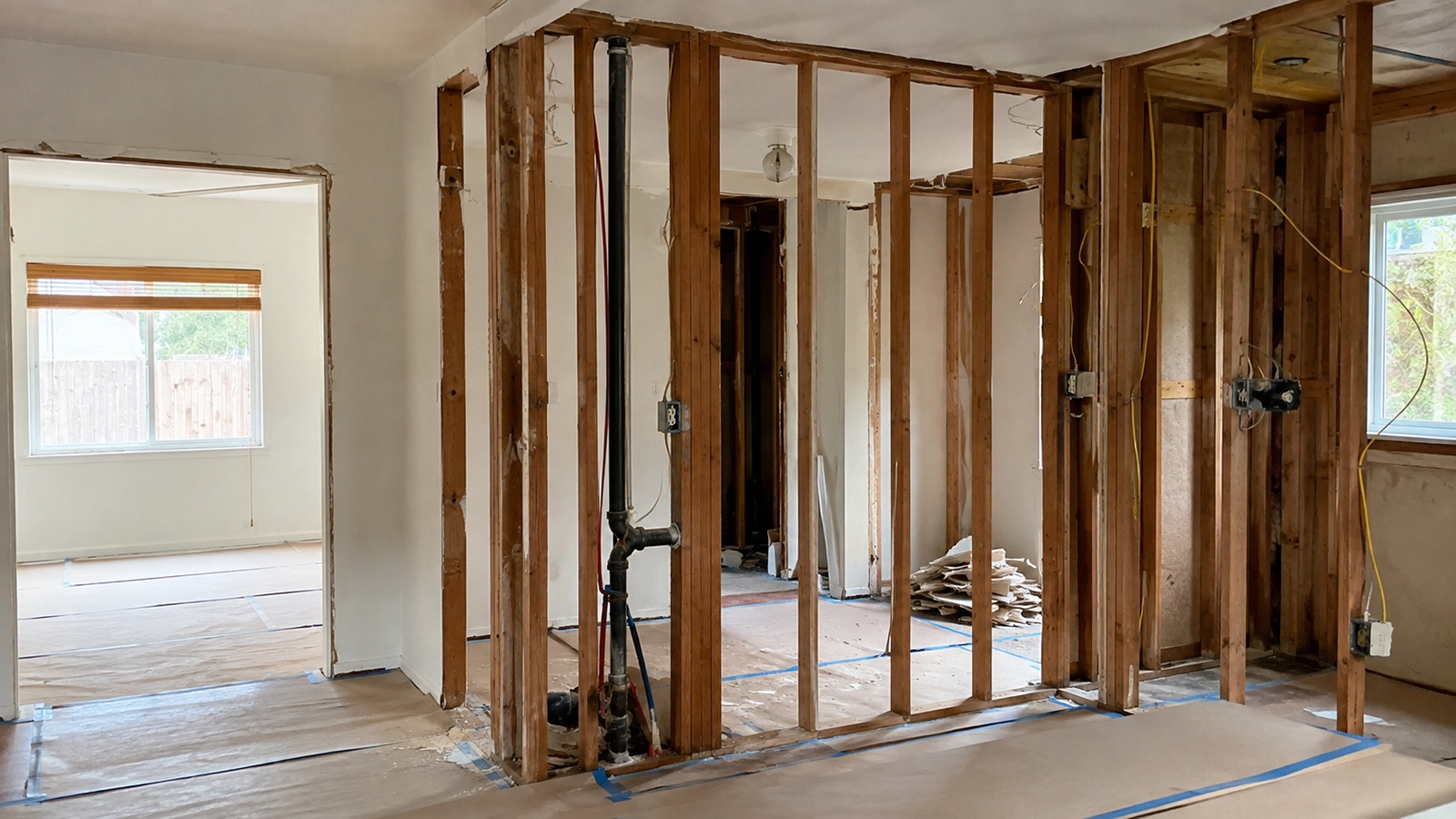
- Any room additions, structural modifications, or other alterations or repairs made to the property since you bought it, performed by a licensed contractor.
- The name of each licensed contractor you hired for that work — but only for jobs where the total contract price (labor, materials, everything included) came to more than the threshold set in Business and Professions Code section 7027.2. That threshold is currently $1,000 (it was raised from $500 by a separate law, AB 2622, effective January 1, 2025). Because §1102.6h simply points to whatever §7027.2 currently says, this dollar figure can move again without AB 968 itself being amended — treat “$1,000” as accurate today, not fixed permanently.
- A copy of any permit that was obtained for the work — or, if the contractor holds the permit, information on how the buyer can get a copy from them.
Sellers can satisfy this requirement by providing the contractor’s own itemized list of work performed, instead of compiling one from scratch.
The statute itself doesn’t spell out a separate penalty for noncompliance. If you have questions about legal exposure, or how this interacts with the standard Real Estate Transfer Disclosure Statement, that’s a question for a licensed real estate attorney — not a blog post, ours or anyone else’s.
Why the law exists — and its real limits
The idea behind AB 968 is straightforward: give buyers of recently-flipped homes roughly the same information a buyer of an older, longer-held home tends to get anyway, since work done years ago by a long-term owner is less likely to be quietly folded into a fast resale.
But the law has real, specific limits worth knowing:
- It only covers work by a licensed contractor. Unpermitted DIY work, or work done by an unlicensed handyman, isn’t something this particular statute requires anyone to disclose. That’s exactly the kind of work an independent inspection is built to catch on its own, disclosure or no disclosure.
- It only applies to owners of under 18 months. A flip held 19 months isn’t covered by this specific rule (though other disclosure obligations under California law may still apply regardless of how long someone owned the home).
- Disclosure is paperwork, not verification. A permit copy tells you a permit was pulled — it doesn’t tell you the final inspection passed, or that the work holds up today. Nobody independent has necessarily looked at the finished product.
If you’re buying a recently renovated home
If a listing shows recent updates and public records suggest a short ownership window, ask directly for the AB 968 disclosure paperwork. Then treat it as a starting point, not a finish line: a disclosure listing “kitchen remodel, permitted” tells you what was claimed, not what a trained set of eyes would find looking at the actual work today.
That’s what a professional home inspection is for. An inspection doesn’t relitigate the seller’s paperwork — it independently documents the property’s current condition, room by room, regardless of what was or wasn’t disclosed. That’s the piece AB 968 was never designed to provide, and it’s exactly the gap between “disclosed” and “verified” that matters most on a recently flipped home.
Good Life Inspections performs residential home inspections across the greater Sacramento area, including for buyers evaluating a recently renovated or flipped property.
[Schedule a home ispection — (916) 481-0268]
If you’re selling a recently renovated home
A pre-listing inspection can surface a problem before a buyer’s own inspector does — while you still have room to address it or price around it. That’s especially useful given AB 968’s paperwork doesn’t reach unpermitted or unlicensed work, which is often exactly what a careful buyer’s inspector ends up flagging anyway.
Frequently Asked Questions
Does AB 968 apply if I didn’t intentionally “flip” the house?
Yes. The trigger is ownership duration and the type of work performed, not intent — an inherited home you renovated and sold within 18 months is treated the same as a deliberate flip.
What if I did the work myself, without a contractor?
Work you performed yourself isn’t “performed by a licensed contractor,” so it falls outside this statute’s specific contractor-name and permit-copy mechanics. That doesn’t necessarily mean nothing else needs to be disclosed — other California disclosure obligations may still apply. A real estate attorney can advise on your specific situation.
Is $1,000 still the right number to use?
It’s accurate as of this article’s last review. Because AB 968 points to a Business and Professions Code section that can be amended on its own, always check Business and Professions Code section 7027.2 directly if the exact figure matters for a transaction you’re working on now.