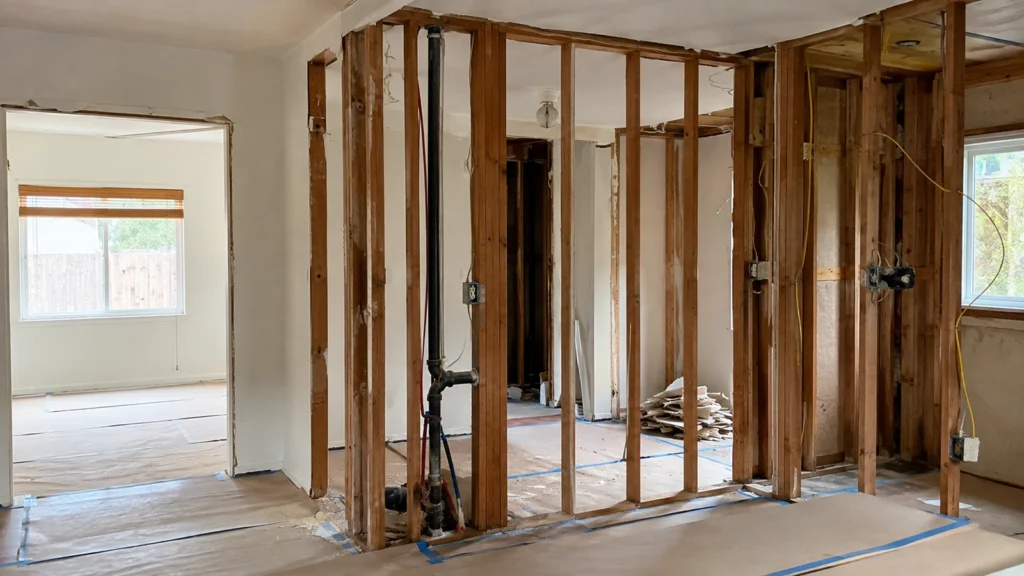

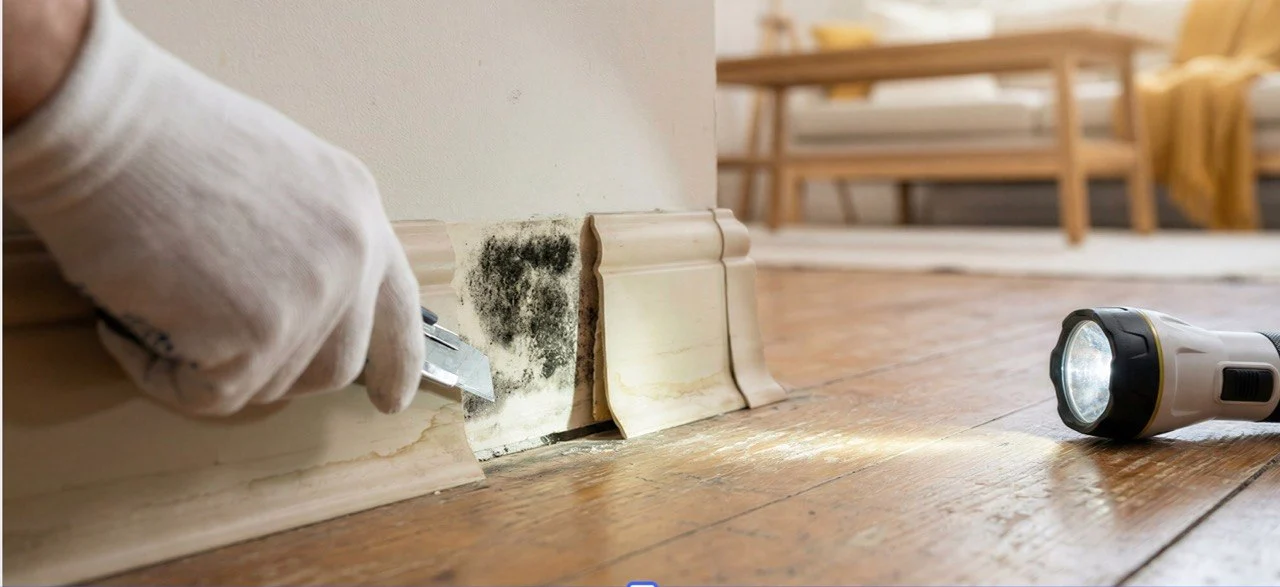
If you found mold after buying a house, you may still have options even though the sale has closed. Start by documenting the condition, stopping active water intrusion when safe, and avoiding unnecessary disturbance of a large or concealed area.
Next, contact the appropriate moisture or restoration professional and notify your insurance carrier if a potentially covered water event may be involved. After the immediate problem is controlled, review the seller disclosures, purchase agreement, inspection reports, repair records, and transaction communications.
Depending on the evidence, the buyer may be able to obtain insurance coverage, request reimbursement, pursue a seller-disclosure or misrepresentation claim, or enforce a written repair agreement. The presence of mold alone, however, does not establish that another party is responsible.
If you have not yet confirmed the source or extent of the condition, start with our guide to checking a house for signs of mold.
Found Mold After Buying a House? Start Here
Take these steps before major cleanup or demolition:
- Photograph the mold and surrounding water damage.
- Stop active leaking when it can be done safely.
- Avoid cutting, sanding, removing flooring, or opening walls without a plan.
- Limit access to an extensively affected area.
- Contact an experienced mold, moisture, or restoration professional.
- Notify the insurance carrier if a potentially covered water event may be involved.
- Preserve disclosures, inspection reports, repair records, estimates, emails, and receipts.
The EPA advises caution when investigating possible hidden mold because disturbing affected materials can release mold from concealed spaces. It recommends considering an experienced professional when hidden mold is suspected.
Do not delay necessary emergency work solely to preserve evidence. Photograph the condition first when possible and keep a written record of anything removed, dried, or repaired.
Who Should You Contact?
The right professional depends on the source and extent of the damage.
- Mold, moisture, or restoration professional: When growth is extensive, the source is unclear, moisture may be concealed, or damaged materials require containment and removal
- Plumber, roofer, or HVAC contractor: To identify and repair the specific source of water or condensation
- Insurance carrier: When sudden water damage or another potentially covered event may be involved
- California real estate attorney: When records suggest nondisclosure, concealment, a false statement, or failure to complete an agreed repair
California does not issue a separate state license specifically for mold assessors or remediators. Before hiring someone, ask about relevant training, experience, insurance, the investigation process, and the exact services included.
One company may not be qualified to locate the moisture source, evaluate the extent of mold, complete remediation, interpret insurance coverage, and determine legal responsibility.
Document the Condition Before Cleanup
Create a clear record before the area changes.
- Take close-up photographs of visible growth, staining, damp materials, damaged finishes, active leaking, condensation, patches, or recent paint.
- Take wider photographs and video showing the affected room and nearby plumbing, windows, appliances, ceilings, exterior walls, or roofing.
- Record the date and location of discovery, when you first noticed an odor or stain, and any recent storms, plumbing failures, roof leaks, or appliance problems.
- Keep the purchase agreement, addenda, disclosures, inspection reports, contractor findings, estimates, insurance communications, emails, invoices, and receipts.
- Maintain a written record of any emergency drying, demolition, cleanup, or repair work.
These records may help establish the moisture source, the condition’s possible timeline, the cost of repairs, and whether an insurance, disclosure, contract, or inspection concern deserves further review.
Find and Correct the Moisture Source
Mold growth is associated with excess moisture. The California Department of Public Health recommends locating the damp or moldy area, fixing the moisture source, drying or replacing wet materials, and cleaning or removing affected materials.
Possible sources include:
- Plumbing supply or drain leaks
- Roof or flashing leaks
- Window or exterior-wall intrusion
- Shower, tub, or bathroom leaks
- Dishwasher or washing-machine leaks
- Water-heater failures
- HVAC condensation
- Crawlspace moisture
- Poor exterior drainage
- Irrigation directed toward the structure
- Previous flooding or water damage
Cleaning visible mold without correcting the underlying moisture problem may allow it to return.
The mold evaluation and source investigation may require different professionals. A moisture investigator may document the affected area, while a plumber, roofer, HVAC contractor, or other qualified trade professional may be needed to confirm and correct the source.
Should You Contact Homeowners Insurance?
Contact the carrier promptly when the damage may have resulted from a covered water event.
Coverage depends on the policy and cause of loss. The California Department of Insurance identifies sudden and accidental water damage as a loss commonly covered by homeowners policies. Mold, flooding, gradual seepage or leakage, wear and tear, neglect, and maintenance-related damage are commonly excluded or limited. Mold resulting from a covered water event may be handled differently under the individual policy.
Coverage may depend on:
- Whether the water event was sudden or gradual
- The source of the water
- Mold exclusions or coverage limits
- Flood or groundwater involvement
- Maintenance conditions
- How quickly the loss was reported
- Whether reasonable steps were taken to prevent further damage
After discovering the damage:
- Photograph it before major cleanup.
- Report a potentially covered loss promptly.
- Ask what records or damaged materials must be preserved.
- Request instructions before extensive demolition.
- Keep mitigation, inspection, repair, and temporary-living receipts.
- Ask for the coverage decision in writing.
Do not assume that mold assessment, testing, remediation, demolition, or reconstruction will be covered. The policy language and the carrier’s claim decision control.
Review the Documents From Your Home Purchase
Gather and compare:
- Transfer Disclosure Statement
- Seller Property Questionnaire, if provided
- Agent visual inspection disclosures
- Purchase agreement
- Repair requests and addenda
- Home inspection report and photographs
- Any separate mold inspection
- Previous inspection reports
- Plumbing, roofing, drainage, or remediation records
- Permits and warranties
- Available insurance claim information
- Emails, text messages, and written representations
Look for answers to these questions:
- Was there a previous leak in the same location?
- Did the seller receive an earlier mold or water-damage report?
- Were previous repairs disclosed?
- Was the moisture source actually corrected?
- Were damaged materials replaced or only covered?
- Did the seller make statements about the property’s condition?
- Did the seller agree in writing to perform specific repairs?
- Could the water problem have developed after closing?
These documents help distinguish a new homeowner repair issue from a possible disclosure, misrepresentation, or contract claim.
When Could the Seller Be Responsible?
Seller responsibility depends on what the seller knew, disclosed, represented, or agreed to do.
Failure to disclose a known condition
California Civil Code Section 1102.13 states that failure to comply with statutory disclosure requirements does not automatically invalidate a completed property transfer. However, a person who willfully or negligently violates a duty under the disclosure laws may be liable for the buyer’s actual damages.
A possible disclosure claim may be stronger when evidence shows that:
- The condition existed before closing.
- It materially affected the property.
- The seller knew about the leak, water damage, mold, or related defect.
- The disclosure omitted or inaccurately described the condition.
- The buyer suffered a measurable financial loss connected to the violation.
False or misleading statement
California Civil Code Sections 1572 and 1710 recognize several forms of fraud or deceit, including knowingly making a false statement, asserting something as fact without reasonable grounds, and making a promise without intending to perform it.
Example: The seller stated that the property had never experienced a roof leak, but prior invoices and messages show repeated repairs in the same location.
Intentional concealment
A concealment claim may require evidence that the seller knew a material fact, had a duty to disclose it, intentionally withheld it, and caused the buyer harm.
Example: The seller knew of recurring water intrusion, covered the damaged materials, and did not disclose the underlying condition.
Fresh paint, patching, or replaced drywall does not independently prove concealment. Other records must connect the seller to knowledge of the problem and the alleged failure to disclose it.
Evidence supporting a seller-related claim may include previous reports, repair invoices, insurance claims, emails discussing a leak, photographs of earlier damage, repeated repairs, or disclosures that conflict with other records.
Could the Buyer Have a Breach-of-Contract Claim?
Possibly, but the buyer must identify a specific contractual promise that was not performed.
A contract claim may apply when a signed purchase agreement or addendum required the seller to:
- Repair a specific roof or plumbing leak
- Complete mold remediation
- Replace identified water-damaged materials
- Provide an inspection or clearance report
- Obtain permits for agreed work
- Provide specified warranties or invoices
Example: A signed repair addendum required the seller to correct a bathroom leak before closing, but the repair was not completed and the leak continued.
A contract claim may be weak when no written term addresses the problem, the seller completed the promised work, the leak began after closing, or the buyer cannot connect the alleged breach to a financial loss.
Ordinary nondisclosure is not automatically a breach of contract. The buyer must identify an enforceable contractual obligation that was actually violated.
Does a Standard Home Inspection Include Mold Inspection?
No. Unless separately contracted, a standard home inspection is not a specialized mold inspection.
California defines a home inspection as a noninvasive physical examination of specified residential systems and components intended to identify material defects.
A standard home inspection does not ordinarily include:
- Confirming that a substance is mold
- Mold sampling or laboratory analysis
- Identifying mold species
- Measuring airborne mold levels
- Opening walls
- Removing flooring or finishes
- Determining the full extent of concealed growth
A home inspector may still report visible and accessible property conditions such as active leaks, water staining, damaged materials, crawlspace moisture, roof defects, or ventilation concerns.
A concern about an inspection must be evaluated within the agreed scope and the conditions that were visible and accessible on the inspection date. Hidden mold alone does not prove that the standard home inspection was performed improperly.
Is a Separate Mold Evaluation or Testing Necessary?
Not always.
The EPA and California Department of Public Health state that when visible mold or obvious moisture damage is already present, routine sampling is generally unnecessary. No federal or California health-based airborne mold limits exist that can be used to determine whether a home passes or fails.
A specialized mold or moisture evaluation may be useful when:
- A persistent odor has no visible source.
- The full extent of the damage is unclear.
- Moisture may be concealed.
- Multiple areas are affected.
- Mold returns after previous work.
- Documentation is needed for an insurance or legal dispute.
- Sampling will answer a specific question that affects the next step.
Testing alone generally cannot establish when mold began growing, prove that the seller knew about it, or determine who is legally responsible.
Before authorizing testing, ask what question it will answer and how the result will change the investigation or repair plan.
What Outcomes Are Realistically Possible?
Depending on the facts and available evidence:
- The insurance carrier may cover some eligible costs.
- The seller or another party may agree to reimbursement.
- The parties may reach a resolution through negotiation, mediation, or insurance.
- The buyer may recover proven damages through a supported legal claim.
- The homeowner may be responsible for the work when the evidence does not establish another party’s responsibility.
The buyer generally cannot simply reopen the inspection contingency or cancel a completed transaction. Rescission may be available in limited circumstances involving fraud, qualifying mistake, or another recognized legal ground, but it is a significant remedy that requires legal evaluation.
Do Not Delay Reviewing a Potential Claim
Different disclosure, fraud, contract, agent, and inspection claims have different deadlines. Purchase and inspection agreements may also require written notice, mediation, or arbitration.
A buyer facing significant damage should consult a qualified California real estate attorney promptly rather than relying on a general filing period found online.
The Bottom Line
If you found mold after buying a house, address the immediate moisture problem first. Document the condition, avoid unnecessary disturbance, contact the appropriate professionals, and notify the insurance carrier when applicable.
A buyer may have options under California seller-disclosure laws, fraud or misrepresentation rules, breach-of-contract law, or the applicable insurance policy. The result depends on the moisture source, what the seller knew, what was disclosed or promised, and what financial loss can be documented.
This article provides general educational information and is not legal, insurance, medical, or mold-remediation advice.
Frequently Asked Questions
What should I do first if I find mold after buying a house?
Photograph the condition before major cleanup or demolition. Stop active water intrusion when safe, avoid disturbing extensively affected materials, and contact an experienced mold, moisture, or restoration professional. Notify the insurance carrier if a potentially covered water event may be involved and preserve all purchase, disclosure, inspection, repair, and insurance records.
Who should I call first after finding extensive mold?
Contact an experienced mold, moisture, or restoration professional when the growth is extensive or the full scope is unclear. You may also need a plumber, roofer, or HVAC contractor to locate and repair the moisture source. Contact the insurance carrier promptly when sudden water damage may be involved.
Can I sue the seller for mold after closing?
Possibly. A claim may be available when evidence shows that the seller violated a disclosure duty, made a material false statement, intentionally concealed a known condition, or failed to complete a contractual obligation. The buyer must prove the applicable legal requirements and document the resulting financial damage.
Can I cancel the home purchase after closing?
Generally, a buyer cannot simply reopen the inspection contingency or cancel a completed purchase. Rescission may be available in limited circumstances involving fraud, qualifying mistake, or another legally recognized ground. A California real estate attorney should evaluate whether it may apply.
Does a standard home inspection include mold inspection?
No. Unless separately contracted, a standard home inspection is not a specialized mold inspection. It does not ordinarily include mold identification, sampling, laboratory analysis, airborne-mold measurements, species identification, or destructive investigation.
Does homeowners insurance cover mold?
Coverage depends on the policy and moisture source. Mold resulting from a covered water event may be treated differently from mold associated with gradual leaking, flooding, wear, neglect, or maintenance problems. Document the damage and contact the carrier promptly for a coverage determination.